Laura
Snapp, 20-year-old daughter of Hampton
Snapp, lived with her aunt and
uncle near Tom Bean, Grayson County in
Texas. Her father, one of
the first settlers in Pottawatomie County,
although he operated a
successful ferry business on the Canadian
River in Oklahoma, operated a
successful bootlegging business out of his
wagon which he drove to and
from the ferry every day. Despite his
illegal trade, he was well
liked in throughout the south and southeast
parts of the county.
Before engaging in the business of
selling booze, was a highly
respected citizen in his neighborhood, about
3 miles from Wanette, and
an exemplary Christian, even having a
"license to exhort in the
Methodist church." (The Shawnee
News, Friday, August 6, 1909, pg.
1)
Mr. Snapp had
been charged with and convicted several
times of bootlegging and violating the
prohibitionary laws; (Shawnee Daily
Herald,
Tuesday, August 3, 1909, pg.1). His
latest conviction during the
last week of July 1909 was reversed in the
Court of Criminal Appeals
because "the information was not verified by
oath of the county
attorney." (The Oklahoma State Central
(Guthrie, Oklahoma), Wednesday morning, July
28, 1909, pg.2)
On Sunday
evening, the 1st of August 1909, about
sundown Hamp Snapp tied his
ferry up for the day and began his short
journey in his wagon to his
home. That night he failed
to return at the usual hour.
Instead his dead body was brought to
his home and up to the front
gate by his faithful horses. (The Shawnee
News,
Saturday, November 13, 1909, pg.1)
Other accounts of the tragedy
testified that Snapp's team and wagon
appeared at the residence of
Charles Green, with Snapp lying dead upon
the seat, a shotgun wound in
his mouth. (Record & Chronicle,
Denton, Texas. Thursday, September 16,
1909, pg. 1) Mr.
Greene told of stopping the team in front of
his house and having
traced track of the wagon back to the scene
of the killing and finding
an empty gun. (The Daily
Oklahoman, Wednesday, January 5,
1910, pg.14)
Officers were
notified who took up the trail as the
mysterious death of Hamp Snapp was
unwinding. (The Shawnee News,
Friday, August 5, 1909, pg.1) The
route over which Snapp had been
carried was traced by the drops of blood to
the scene of the killing
where signs of a struggle were found.
From this place the hoof
prints of the horse led to the town of
Byars. (The Shawnee News, Friday,
August 6, 1909, pg.1)
In
the meantime in Byars a young boy, Willie
Byers, could not sleep.
His mother noticing his anxiety, asked
her son to tell her what
was bothering him. Willie told his
mother that he, in company
friends with Hawk Jones, John Ruddell, and
Pat Ellis had been drinking
and wanting more, they went looking for
Snapp at the ferry the previous
night to buy some beer. Not finding
Snapp at the ferry, they
figured he had started for home and went
after him. Soon they
overtook the man and caused him to stop so
that they could purchase
liquor off of him. They purchased four
bottles and while standing
around the wagon, one of them picked up a
gun from the bed of the wagon
and wondered if it was loaded. The gun
was discharged with the
full charge of shot striking Snapp in the
mouth. Frightened, the
boys threw the gun away and let the startled
horses run homeward with
their dead driver. (The Shawnee
News, Saturday, November 13, 1909,
pg.1)
Three
months after her husband's death, the widow
of Hampton Snapp, frail and
visibly pale accentuated by the deep
background of her mourning attire,
visited Shawnee to consult with the County
Attorney concerning the
prosecution of the four boys charged with
the crime of robbery, seeking
justice in the death of her husband at the
hands of the accused. (The Shawnee
News, Saturday, November 13, 1909,
pg.1)
The
preliminary hearing had to be held under a
big tree near Wanette with
County Attorney Holt representing the state
due to the crowd of
citizens from the southern part of the
county being present for the
trial. At the preliminary hearing, the
story of Willie Byers was
proven to be substantially correct although
there was difference among
the four boys' stories as to who picked up
the gun. It was also
shown that Snapp, when peddling liquor,
always carried a cocked gun.
(The Shawnee
News,
Saturday, November 13, 1909, pg.1) A
Petit Jury was called for
Monday, January 3, 1910, at which time the
criminal trial began in the
superior court. (The Shawnee
News,
Monday, December 27, 1909, pg.4) The
defendants chose to be tried
separately with the case against Willie
Byers being called first. (The Daily
Oklahoman,
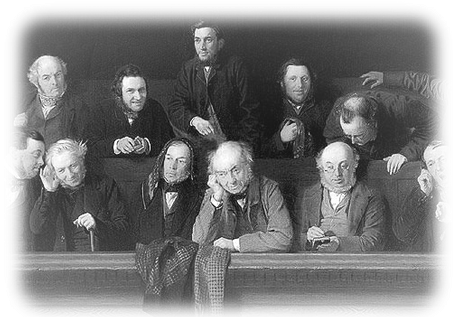
Tuesday, January 4, 1910, pg.11) Nine
jurors were chosen to
occupy the jury box on Tuesday, January 4th
with the remaining three
chosen on Wednesday, January 5th. They
were: J.B. Buckler, J.F.
Jones, H. Waller, E.L. Hambey, Frank
Knapenberger, I.E. Carter, J.M.
Seward, James Turner, J.S. Son, J.R.
Lansdown, W.H. Walker and J.T.
Coats. Over 20 witnesses were
introduced by the state to prove
that the crime of murder was premeditated.
All defendants claimed
that the shooting was accidental. (Shawnee Daily
Herald,
Wednesday, January 5, 1910, pg.1) The
County Attorney's case was
to prove that Byars and Snapp had had
trouble the day before the
killing and that Byars had said he would
kill Snapp. John Ruddell
testified during the trial that he and his
three companions were
drinking the night of August 1, 1909, that
they had purchase liquor
from Mr. Snapp earlier in the evening of
August 1st, that they had
later caught up with Mr. Snapp on the road
leading to his home, that he
had picked up the loaded gun which
accidentally discharged, and the
team of horses then ran away. (Shawnee Daily
Herald,
Friday, January 7, 1910, pg.1) By noon
Saturday the fate of Will
Byers was put into the hands of the jury,
who found him guilty of
manslaughter in the first degree,
recommending an imprisonment sentence
of 15 years in the state prison.
A request for a new trial was
denied and bond was placed at $8,500. (The Daily
Oklahoman, Sunday, January 9, 1910,
pg.9)
The defendant
received the verdict with a sneer; none of
his family was in the court when the verdict
was returned.
"Ruddell
was not in court last night when the verdict
against his companion was
rendered but arrived a few minutes
afterwards and is said to have
exclaimed: "Gee, that looks bad for me." (Shawnee Daily
Herald, Sunday, January 9, 1910,
pg.1)
Mid-week the bond for Ruddell was
ordered forfeited since he had
left the state. Ex-Sheriff William
Grace traveled to Texas in an
attempt to locate the fugitive whose parents
lived in Denton County and
bring him back to Oklahoma for trial. (Shawnee Daily
Herald, morning edition, Sunday,
January 9, 1910, pg.1)
Hawk
Jones was the second of the defendants to be
place on trial, beginning
January 17, 1910 with the same defense of
accidental shooting. (Shawnee Daily
Herald, Sunday, January 16, 1910,
pg.10) Special Judge Miley was elected
January 20th to preside at the trial of
Jones. (Shawnee Daily Herald,
Friday, January 21, 1910, pg.5) The
prisoner testified for
more than 2 hours concerning the
events that preceded the killing
of Mr. Snapp, stating that the group had
been on a 3-day spree of
drinking and that John Ruddell took the gun
from the wagon which was
accidentally discharged. (Shawnee Daily
Herald,
Tuesday, January 25, 1910, pg.6) The
jury was dismissed on
Friday, January 28th after having been out
for over 24 hours and being
dead-locked at 9 for acquittal and 3 for
conviction. (The Daily Oklahoman,
Friday, January 28, 1910, pg. 18) A
second trial for Hawk Jones began January
31, 1911. (The Shawnee Daily Herald,
Tuesday, January 31, 1911, pg.1) The
second jury returned a
verdict of guilty and fixed his punishment
at 4 years in the state
penitentiary at McAlester. (The Shawnee
Daily Herald, February 2, 1911,
pg.1)