

This biographical profile accompanies the 1937 WPA interview of Mrs. Louise Jones, an African American woman born enslaved in Dinwiddie County, Virginia. The profile synthesizes her first-person testimony with available census records and city directory evidence to place her life story within a documented historical framework. Where records are incomplete or inconclusive, interpretations are identified as provisional and subject to further research.
Louise Jones stated in her 1937 WPA interview that she was born enslaved in Dinwiddie County, Virginia, and that she had been enslaved by Lewis Meredith, later passing into the household of his daughter, Mary (Meredith) Sydnor, following Meredith’s death. Her account reflects common mid-nineteenth-century probate practices in Dinwiddie County, where enslaved individuals were divided among heirs through estate settlements.
Louise described a childhood spent caring for infants and recalled being hired out at times, including work in Petersburg. She remembered the fear of slave auctions, though she stated she was never whipped by her enslavers. She also recalled discipline from family members, including her grandmother, and referenced her father’s presence during the Civil War period—evidence that her immediate family was not permanently separated during slavery.
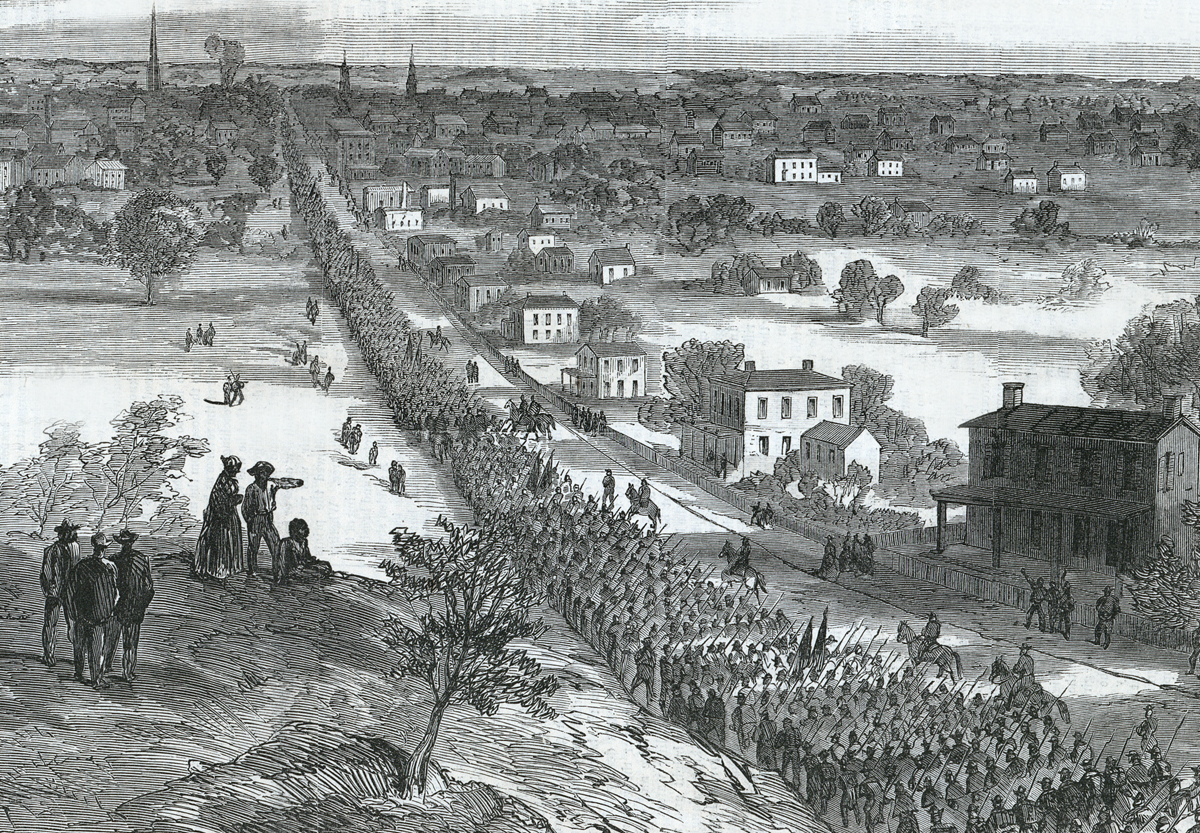
Her recollections of Union troops entering Petersburg during the Civil War are vivid and detailed. She described soldiers distributing food, opening stores and smokehouses, and giving her money, which she said her father later took from her. These memories are consistent with documented Federal activity in Petersburg during 1864–1865.
Louise stated that she married during or shortly after the Civil War, recalling a traditional “jumping the broom” ceremony followed later by a minister-performed marriage. No civil or church marriage record has yet been identified.
By the 1930s, Louise was residing in Petersburg, Virginia. The 1937 Petersburg City Directory lists “Jones, Louise, h 501 Clinton,” the same address recorded by WPA interviewer Susie Byrd at the time of the interview on 12 February 1937. This directory entry provides a firm documentary anchor linking the interviewee to the Petersburg record trail.
Louise identified herself as married and consistently used the surname Jones. Her husband’s given name is documented as James, as shown in the 1900 U.S. Census, where she appears as Louisa Jones, wife of James Jones, residing in Petersburg. This census provides the earliest named federal record linking Louise to a specific family unit.
In the 1900 census, the household at 12 McKeever Street, Petersburg, includes James Jones, wife Louisa, and their daughter Hattie Jones. In this same record, Louise reported that she had borne fourteen children, ten of whom were living at the time. This self-reported information helps explain the appearance of adult children and grandchildren in later census households.
The connection between the 1900 household and the woman interviewed in 1937 is strengthened by city directory evidence. The 1937 Petersburg City Directory lists Louise Jones residing at 501 Clinton Street, the same address recorded by WPA interviewer Susie Byrd. The directory also lists Hattie Jones at this same address, establishing a documented mother–daughter household immediately prior to the interview.
By 1920, Louise appears in a multi-generational household that includes Mary L. Jones, identified in that census as a granddaughter, consistent with Louise’s age and reported number of children. In 1930, a woman enumerated as Louisa Jones, approximately seventy years old, appears with a younger woman and an infant granddaughter. These later census entries are considered probable but not yet conclusively proven to represent the same individual interviewed in 1937.
Louise Jones died in 1937 in Petersburg, Virginia. Her Virginia death certificate identifies her as Louise Jones, married to James Jones, and names her daughter, Hattie Jones Horsley, as the informant. At the time of her death, Louise was residing in Petersburg, consistent with her address at 501 Clinton Street as recorded in both the 1937 Petersburg City Directory and the WPA interview conducted earlier that year ().
The death certificate reports that Louise was buried at People’s Memorial Cemetery on 12 September 1937. At present, this burial information is based solely on the death certificate. No independent burial record has yet been examined.
A search for a memorial on Find A Grave has not identified an entry for Louise Jones. Cemetery registers, funeral home records, and other burial documentation for People’s Memorial Cemetery have not yet been searched ().
Site Coordinator's Note: This is a transcription from WPA/VWP Virginia Negro Studies Project interviews with Virginia ex-slaves and other elderly African Americans, which were conducted between November 1936 and November 1937. The original document can be accessed here: Original Source.
Description: This transcription features the interview of Mrs.Louise Jones, Petersburg. Mrs. Louise Jones reflected on her early life in Dinwiddie County as an enslaved child, where she tended to babies using meat skins tied with string to quiet them, believing it was healthier than modern methods, and noted she received no whippings from her mistress. She described the harsh realities of slavery, including auctions where slaves prayed for kind owners, secret prayers without formal church, and a brief runaway episode where she pierced her ears with a brass pin during a moment of rest. Post-emancipation, she received nothing from her former owners' estate, criticized moving pictures for corrupting youth, and vividly recalled Union soldiers' arrival in Petersburg, who provided money and provisions but whose kindness was undercut when her father took her earnings.
This transcription was prepared by an AI assistant (Grok 4.1) at the request of Ed Olsen, Coordinator of the Dinwiddie County USGenWeb site. Ed Olsen has reviewed and verified the content for accuracy and relevance to the site's mission. © 2025.
I couldn' tell you how long I been here, but I was here fo' dis here Petersburg Depot was built. Bread an' born in Dinwiddie County. I b'long to Louis Merriday. From dat I fell to his daughter, Mary Sydnor. All us slaves was 'vided up; yes, chil' some o' 'em sol' 'way fo' the ole heads died. Lord! Lord! dem times was times? Um, um! Yes, Honey when old Massa an' Mistress pas' put, things change'. Dey start' 'vidin' us slaves up 'mong'st de heirs.
I uster set on a pallet, an' 'tend to de babies. Yes, some dem white babies an' nigger babies too would cry. An' do you know it was jest fo' meanness. I know some times 'twon' nothin' in dis wide worl' wrong wid 'em. I reckon reason colored folks love meat skins today is 'cause dey got it so much when dey's babies. Durin' slavery time us nurses uster keep de babies from hollarin' by tying a string 'roun' a piece of skin an' stickin' it in dey mouth. You see if dey got chocked, we pull out de meat skin wid dis string. Lord, yes! I've done it many a time. You don' hear talk of dat now adays. What is dat thing call dey use now? Nipple! Yes, yes. 'Taint nothin' but rubber an' win'. I b'lieve det meat-skin-suckin' help babies. You all got a lot o' tom foolishness in bringin' up ... brats in dis day an' time.
No, I didn't have uh bit o' whippin' on my back; no more than my grandma give me. Mistress didn't 'low it.
Slaves was sol' like dis. Dey carry dem to de block. Dis block was where dey was put on an' sol' to the highes' bidder; you know like people sell cattle, horses an' cows. Dem was sad times. Some times we would hear de white folks plan de sale; an' call slave names dat dey want to carry to de block de day b'fo'. Den Honey, we prayed, sang an' call on my God dat we git uh good massa an' mistress.
You know, Honey, some mistress an' Massas was mean to dey slaves an' dey would beat 'em. Den de poor things would run away.
When I was uh slave I didn't know what church was. We talk to God an' prayed by ourselves jes' whatever we was workin'; 'course de white folks didn't hear us. Chil', look like right now I can hear some o' dem mournful voices; 'specially brother John. He would always sing an' pray. Um! Um! He was sol', den I los' track o' him. De man dat bought him took his slaves 'way down South. Dats right fer, ain't it?
Mistess hired me out to work on Washington Street. Lordy me! Honey, dat was de meanest white 'oman in de world, I reckon. Dat 'oman treat me so mean dat I took an' run 'way from her. You know I jes' had to run 'cross de field to jinin' plantation, but 'twas three or four miles fo' I got to de house. I will always recollec' dat day going through de woods. I had to pass a spring. I got tired from runnin'. After I got out o' ev'rybody's sight, I start walkin' an' playin' 'long, as chillun will do. I got tired an' sat down on de bank near de spring. After gettin' a drink o' de nice cool water, I sat down to pick a splinter out my big toe. Wid dat same brass pin I pierced dese here holes in my ears, an' put straws in 'em. And do you know, Honey, I ain' never had no trouble wid dese brass-pin holes in my ears. By dat time 'twas late, so I went on back to my mistress.
My mistress slaves, like lan' an' property, went to de heirs. An' when things was settle up dey didn' give me "sweat off' de black cat's eye". No didn' give me nottin'.
Slaves call demselves married when dey jump over uh broom stick. But I was married by uh preacher.
What I think o' de young folks o' today? Well, dem movin' pictures dey is runious to young folks. I jes' naturally think it bes' not to have movin' pictures. It causes 'em to spen' money dat dey could buy vituals an' rags wid to put on dey nacked backs. You done seen de little dirty an' ragged boys hangin' 'roun' picture places. Gal, I tell you some times dey will go uh stray doin' like dey see in dese here pictures; shootin', killin' an' goin' on. Yes, 'tis terrible. I went to one once an' seed it fo' myself. Nobody will 'suade me to go in unother one. I don' b'lieve in no such carryin's on. Yes, dat "mov-ee" as you calls it keeps uh heap o' 'em in jail.
WAR
I 'member the very night de soldiers took Petersburg. I recollec' 'twas jes' 'bout de breakin' o' day. We lived on Canal Street. I could hear de guns. All o' uh sudden three soldiers 'peared an' start knockin' an' beatin' on de door, askin' if our white folks was good to us. If we had said "no" dem Yankees would uh kill Mistess and Massa.
Dem soldiers dey kep' comin' to town 'til night. Mother made coffee an' I toted water from de spring. De soldiers would give me money. Man, sir, when dey lep' I had uh whole hat full o' money. Do you know my daddy took all my money. No, didn't give me one brass cent. Chill' like, I cried an' jes' bellowed 'til de ole lady spank me. Dat was uh spankin' I 'member 'til dis day.
When Yankees come to uh store dey would break it open, an' give you all you could toat. Dey broke into smoke houses an' dey would throw de bigges' hams; whole meat sides, an' de lak. Flour, meal, corn an' everything was yours, an' if de niggers didn' git what dey want, 'twas dey own fault.
Note: This transcription is provided exactly as written in the original document, without corrections for dialect, spelling, or grammar, to preserve the authenticity of the narrative. Source: Virginia Works Progress Administration (WPA) Writers' Project, Library of Virginia or similar archive (LH01368).
"Courtesy of downloaded images from the Library of Virginia".
Mrs. Louise Jones is directly documented in the historical record through her 1937 WPA interview, conducted at 501 Clinton Street in Petersburg, Virginia, and corroborated by the 1937 Petersburg City Directory, which lists her at the same address. Her Virginia death certificate, issued later in 1937, confirms her identity, marital status, and family relationships by naming her husband as James Jones and her daughter Hattie Jones Horsley as informant.
The 1900 U.S. Census provides the earliest named federal record linking Louise to a specific family unit, identifying her as Louisa Jones, wife of James Jones, and mother of Hattie Jones. In that census, Louise reported having borne fourteen children, ten of whom were living, a statement that accounts for the appearance of adult children and grandchildren in later census households.
Later census records from 1920 and 1930 present individuals whose ages, locations, and household structures are consistent with Louise’s documented life course. These records are considered probable but not yet conclusively proven matches and are therefore treated as supporting, rather than primary, evidence.
While enslaved individuals are unnamed in pre-emancipation records, Louise’s testimony regarding her enslavement by the Meredith family and subsequent association with the Sydnor household aligns with known probate practices and slaveholding patterns in Dinwiddie County. Taken together, the WPA interview, census data, city directory entries, and death certificate form a coherent and well-supported identification of Mrs. Louise Jones across her lifespan.
This biographical profile was prepared to accompany the WPA interview transcript and will be updated as additional records are identified and evaluated.
Editorial Assistance Notice: This biographical narrative was structured and drafted with the assistance of ChatGPT, an artificial intelligence language model, using factual information, research notes, and source citations provided by the compiler. All genealogical conclusions, interpretations, and source selections are the responsibility of the author. No original records were generated by artificial intelligence; all historical facts are derived from documented primary and secondary sources cited within this page.
December 23, 2025
If you have questions, contributions, or problems with this site, email:
Coordinator - Ed Olsen
State Coordinator - Jeff Kemp
If you have questions or problems with this site, email the County Coordinator.
Please do not ask for specific research on your family. I am unable to do personal research.